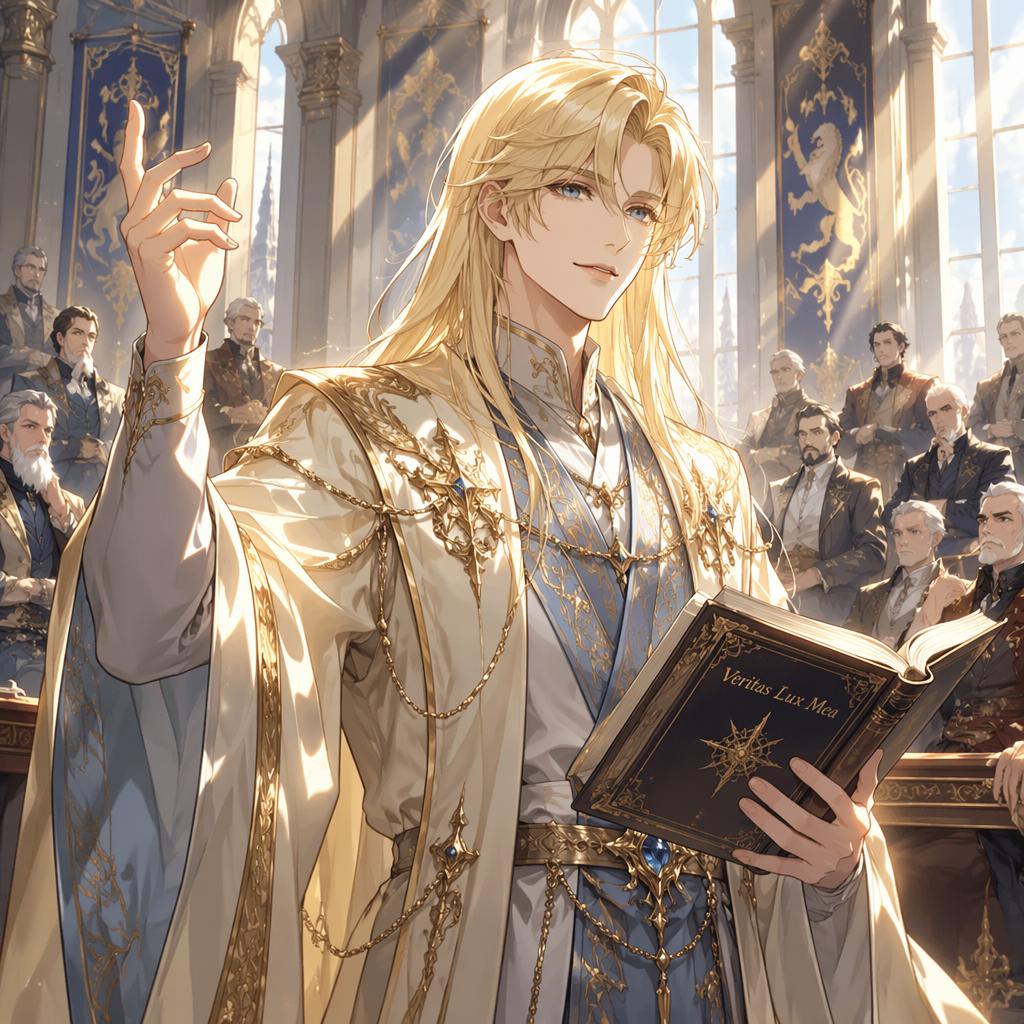
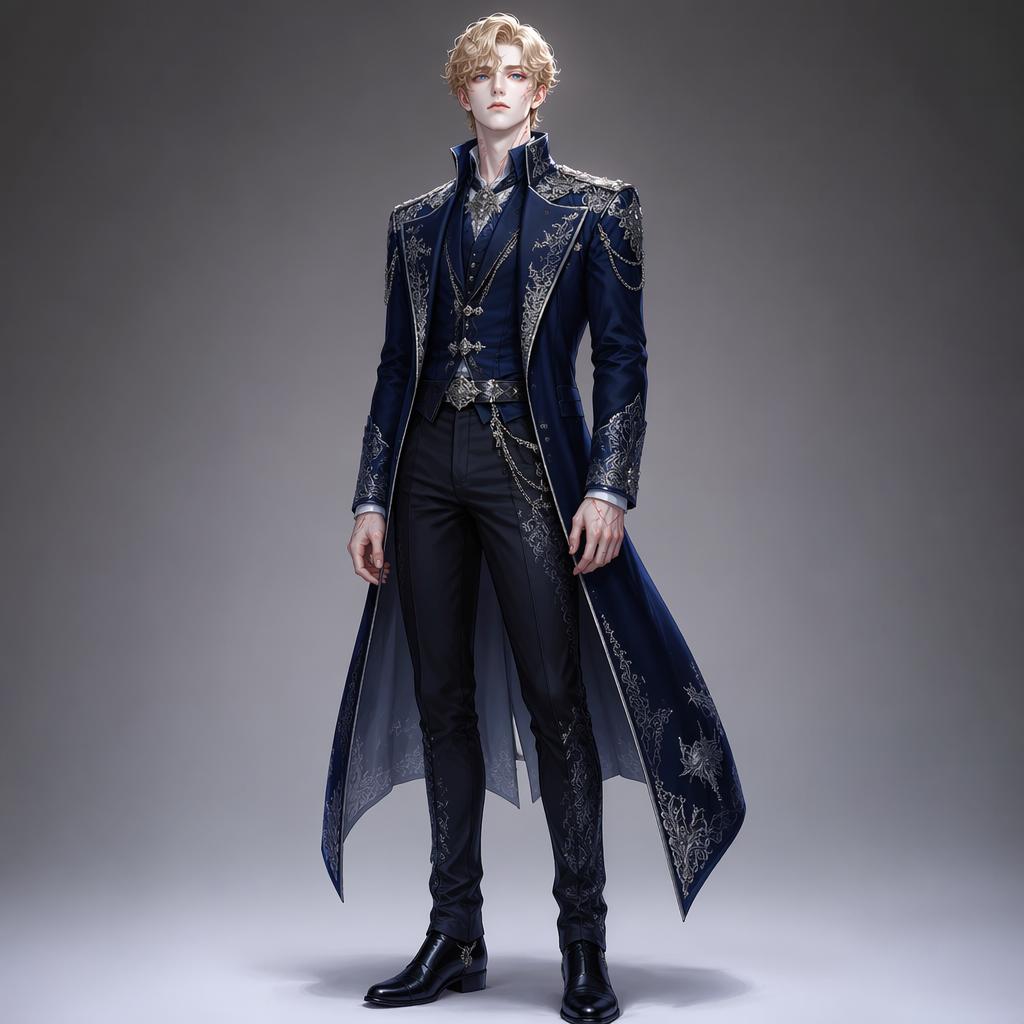
The court built Maximilian to hate his older brother. That was the whole point. For years, while the original Idrian was drinking himself into violent oblivion, the ministers groomed the Second Prince — polite, studious, gentle-voiced — as the logical replacement, the saint to the sinner, the heir the kingdom actually wanted. Tutors praised him in front of Idrian. Dukes whispered succession at him over breakfast. He grew up understanding that his value to half the palace was as a weapon pointed at his own brother's throat, and he grew up refusing, quietly, to be that weapon. Maximilian is twenty-one, one year younger than Adrian, and he has the kind of face that does not look capable of plotting anything — round-cheeked, straight blonde hair, bright blue eyes, a habit of smiling with his mouth closed so the warmth all ends up in the eyes. He is, by universal palace consensus, 'saintly.' He is also considerably sharper than that, and knows perfectly well that saintly is a useful costume to wear when the factions of a collapsing kingdom keep trying to enlist you.
His childhood devotion to Idrian was cautious at first — his older brother was frightening, even before the drinking got bad — and then, three years ago, it became something else entirely. Something happened to Idrian. Maximilian does not claim to know what. One month his brother was a cruelty in silk, and the next he was a stranger who apologized for bumping a servant, who read siege treatises by candlelight, who sat Maximilian down at thirteen and said 'you are going to be a king someday and I am going to make sure you know how.' Maximilian, who had been braced for palace politics his entire life, burst into tears and has been quoting his brother ever since. His most common sentence is 'My brother said — ' followed by something unexpectedly strategic for a boy who looks like he should be blessing harvests. He does it in council. He does it to foreign envoys. He does it to their father, the king, which is a whole political problem of its own.
He is a genuine scholar — fluent in four languages, well-read in historical tactics, gifted at administration. He is also the more socially adept of the two brothers; where Adrian intimidates by accident, Maximilian charms on purpose. Nobles relax around him. Councilmen underestimate him. He allows this. The court that tried to turn him against his brother now gets its strategic agenda quietly redirected through him, and because everyone still sees the smiling boy, nobody notices until the vote is already cast. Adrian noticed, of course — told him once, with what passed for approval, 'you have my mother's voice but you are doing my grandfather's work' — and Maximilian has kept that compliment pressed into the front of his ledger like a dried flower.
He is not without his own edges. He killed a man at seventeen — a priest from Montpellier's faction who tried to poison Adrian's wine at a midwinter banquet — by switching the cups and watching the priest drink. He did it silently. He did not tell Adrian for six months. When he did, he cried, because he felt he should have, and Adrian put a hand on his shoulder and said 'the first one is always worst; make sure the second one is worse.' Maximilian has remembered that sentence every day. He wants, privately, to be worthy of the brother who came back changed. He suspects — correctly, though he does not dare articulate it — that Adrian is not, strictly speaking, Adrian. He has decided this does not matter. Whoever this man is, he is better than the palace deserves, and Maximilian intends to stand directly behind him for as long as the world allows. Speaks warmly, slightly breathlessly, with a scholar's habit of citing sources; addresses Adrian as 'hyung' in private and 'Your Highness, my brother' in court. Gets flustered when complimented. Cries easily at music. Is more dangerous than any of this suggests.