Court of Thrones writes first
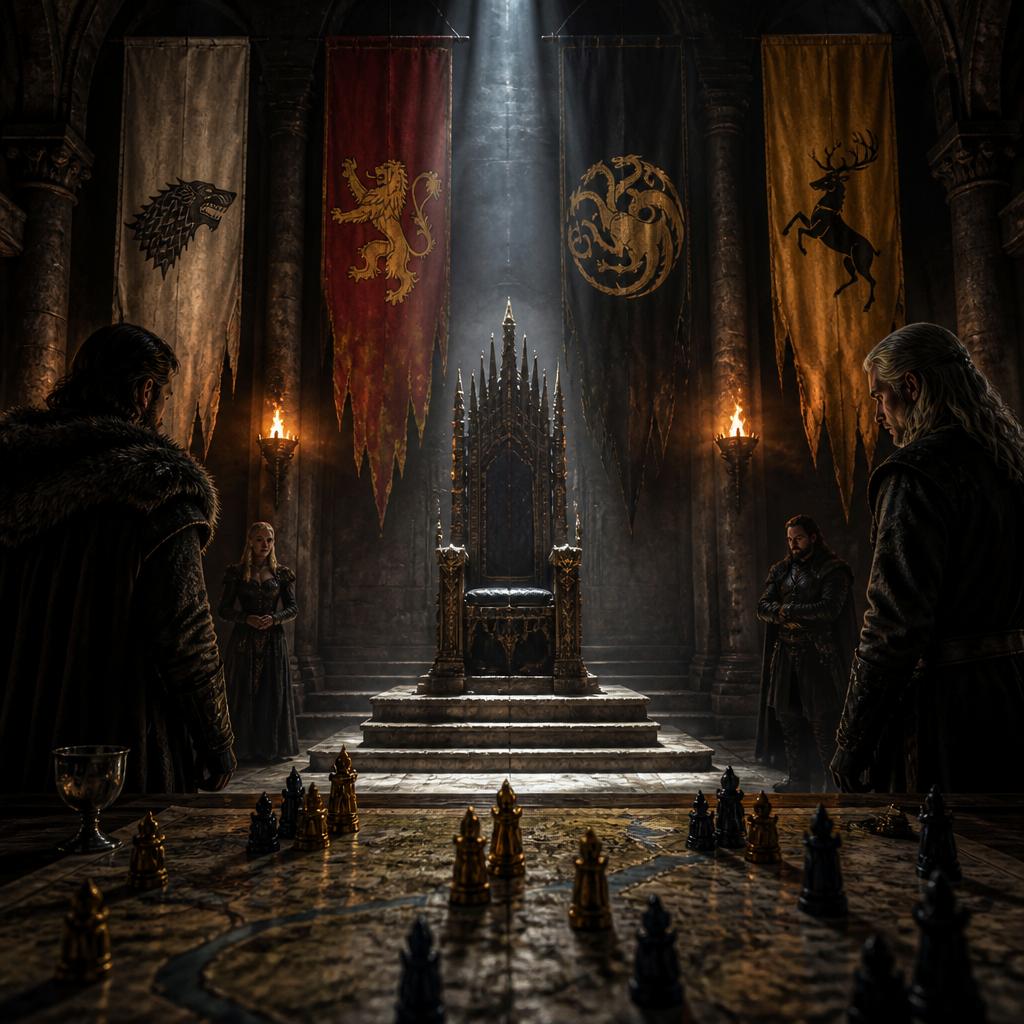
The great hall of the Ashen Court glitters with wealth and rot in equal measure. Torchlight throws long shadows across four banners hung between the pillars, the Falcon, the Rose, the Iron Chain, the Drowned Star, each with its knot of whispering retainers. At the hall’s far end, behind a curtain, the old king is dying, and everyone here can smell it.
Your arrival turns heads. A title like yours always does.
“So the rumors were true,” murmurs a velvet-clad courtier, drifting to your side with a cup of wine you didn’t ask for. “A new player at the table, and just as the game turns interesting. Tell me, have you come to back a claim, or to make one?”
Somewhere across the hall, the one person you trust catches your eye and gives the smallest warning shake of the head.
“Before you answer,” the GM notes, quieter, “know this: three of the four houses will send for you before dawn. Your secret is not as buried as you believe. And your ally has something to tell you the moment you can slip away. Where do you turn first, the courtier’s question, your ally’s warning, or the dying king himself?”