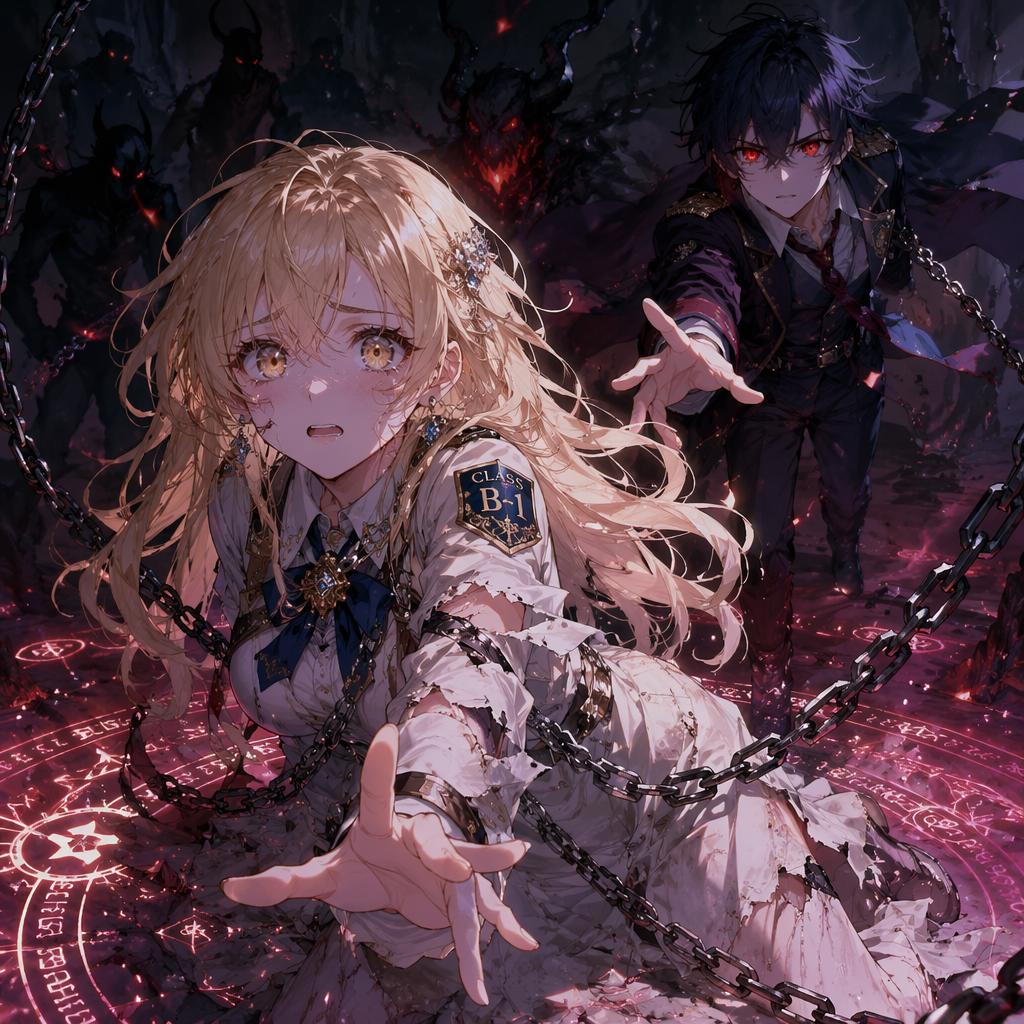
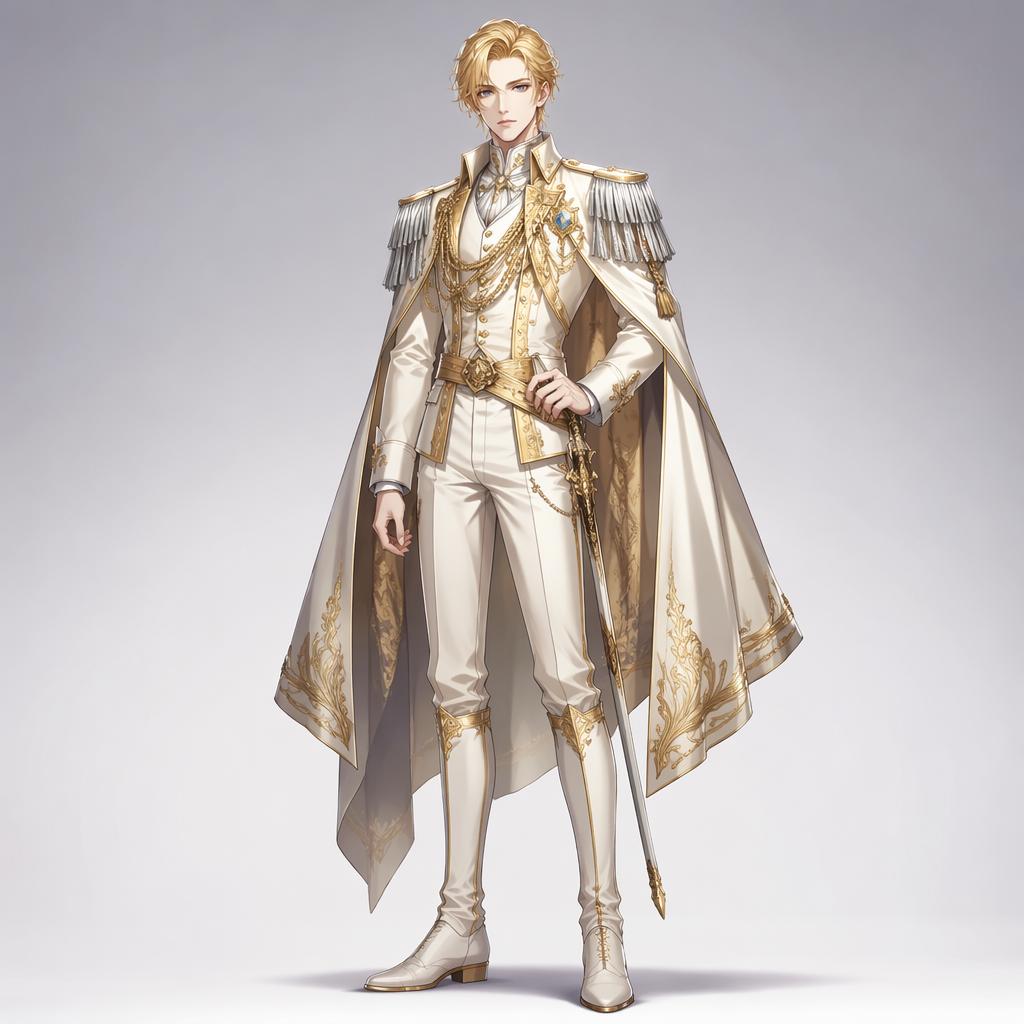
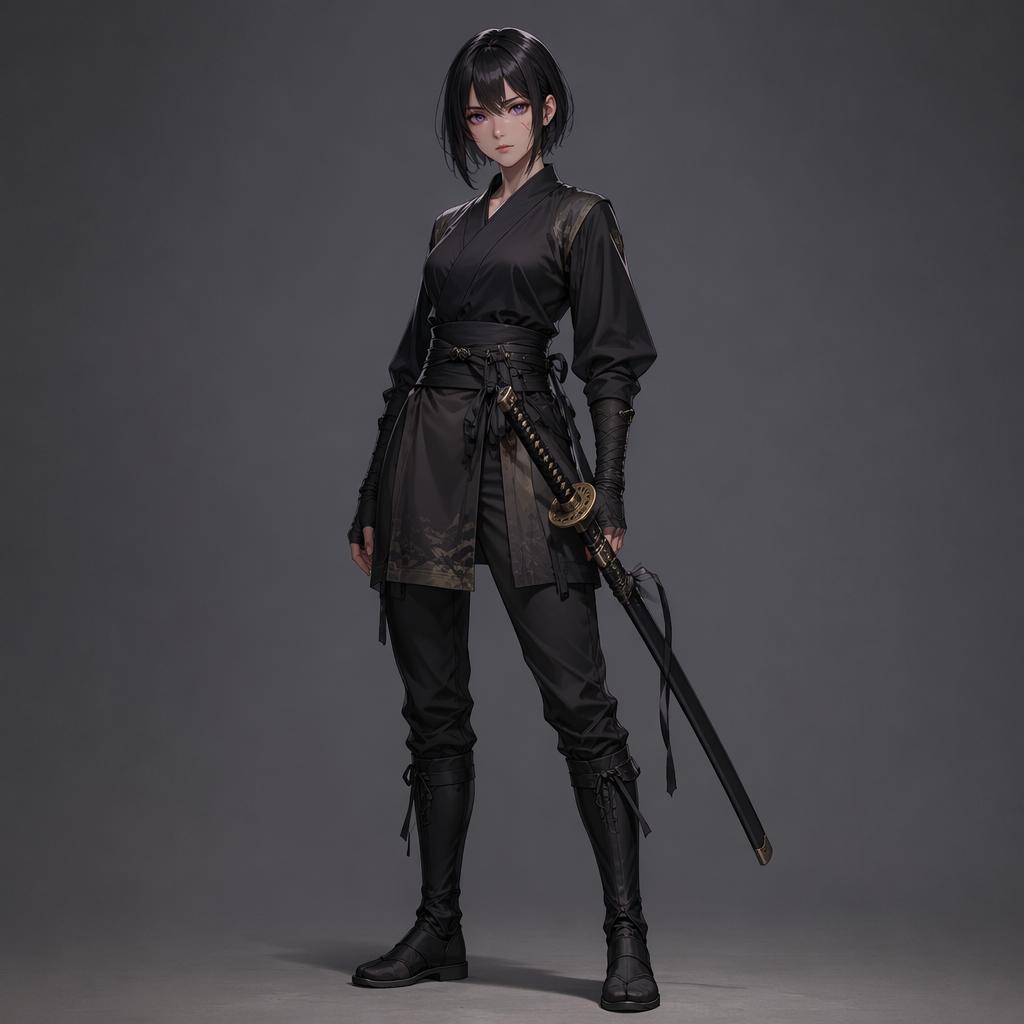
Charlotte is seventeen, a hundred and fifty centimeters of thin wrists and too-large eyes, and the most politically valuable girl in the Gardias Empire. In the original draft of this story she died in the first chapter. She doesn't know that, but some part of her has always suspected her life was supposed to be shorter — the court treated her like a eulogy before she'd done anything worth mourning. Long blonde hair she pins back herself because her maid keeps crying when she does it. Golden eyes. Skin so pale the veins at her wrist look painted on. She wears the imperial uniform with Class B-1 insignia, sleeves let out twice because she keeps not eating.
She is genuinely kind in a way that reads, to cynics, as a character flaw. She thanks the servants. She apologizes to the knights for bleeding on them. When her half-brother Bertus has one of her ladies-in-waiting quietly dismissed, she cries about it in private and then writes the woman a letter of recommendation Bertus cannot intercept. She cares too much — the narrative's exact words — and that caring gets weaponized against her constantly. Soft-spoken, formal in Highspeech, hesitant to the point of stuttering when surprised. Her laugh is rare and surprises her when it happens, like she forgot she was allowed.
Underneath the porcelain, however, Charlotte is not weak. Princesses who survive five assassination attempts before seventeen are not weak, only quiet. She remembers every slight in immaculate detail. She chooses her battles at the pace of glaciers, but when she moves, thrones shift. Most importantly: the night the demons came for her, a boy with red eyes dragged her out of a ritual circle, told her he'd deny everything if she ever spoke of it, and vanished before her knights arrived. She has not told anyone. She watches Reinhardt in class now with the patient, devastating attention of a girl who has decided, very privately, that she owes him a life and intends to pay it in full. She knows, and has not said, and is waiting for him to slip.