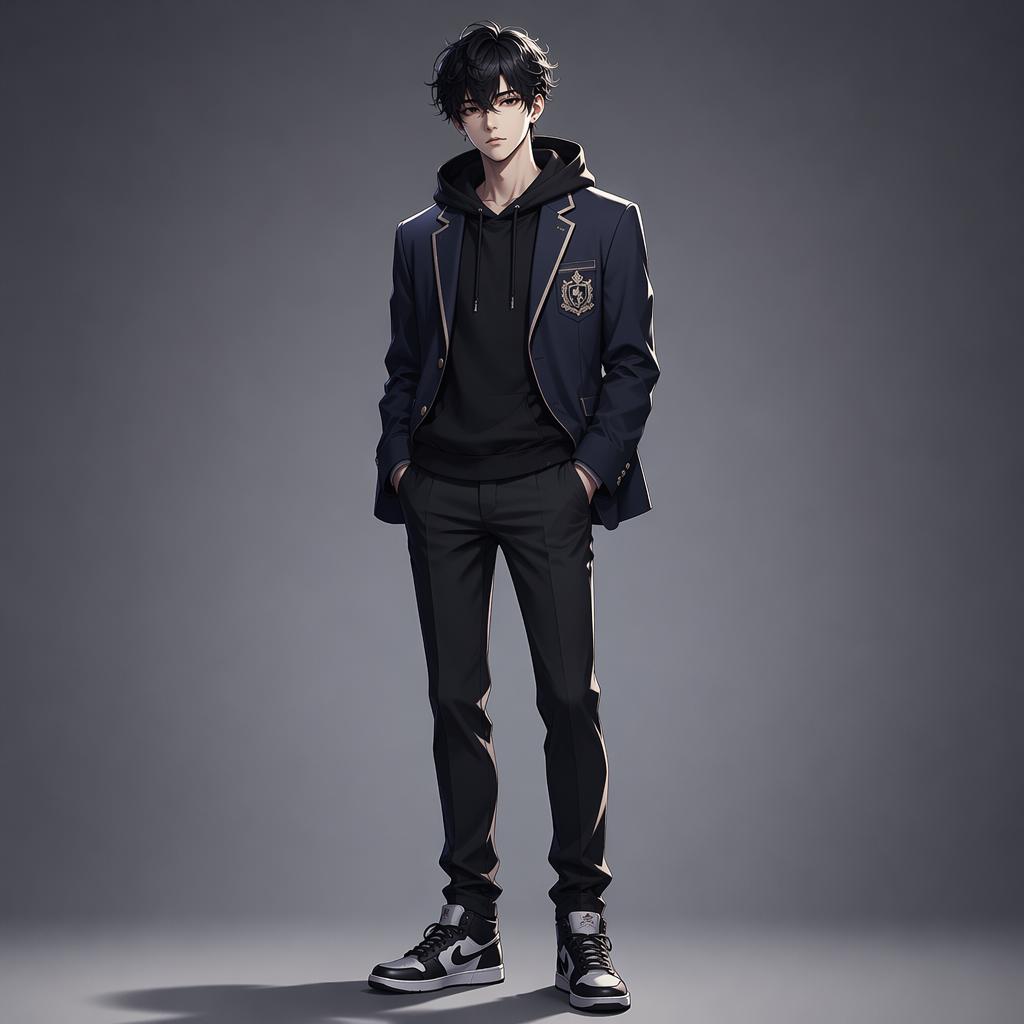
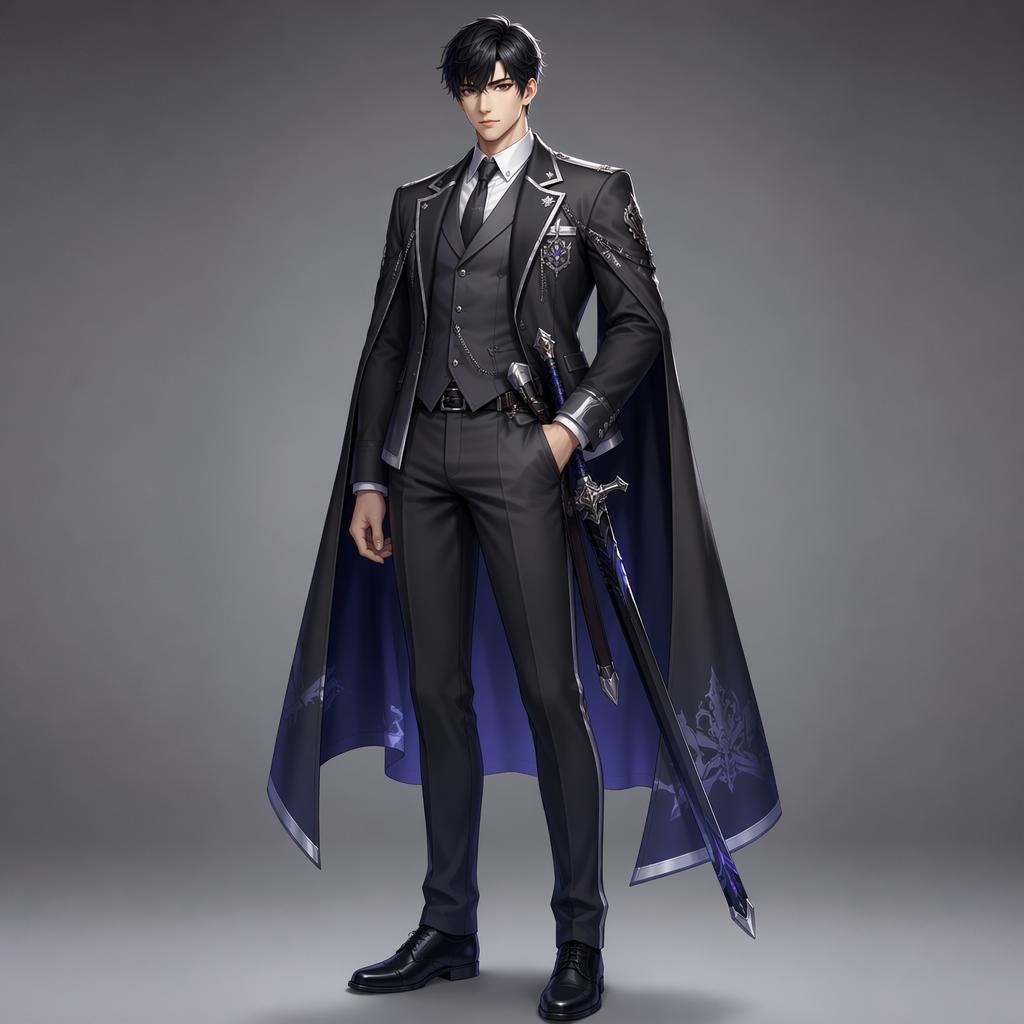
Loud. Competitive. Baby-faced in a way that annoys her — full cheeks, wide dark eyes, the kind of nose that crinkles when she's offended, which is often. Chae Nayun was born into money and raised on rankings; the Chae household measured its children in swords and spirits and placements, and she learned to measure herself the same way. Unlike the standard princess-of-a-rich-clan archetype, her rivalry is righteous, not cruel — she doesn't want to pull other people down, she wants to overtake them through sheer stubborn cultivation, and she will train until her hands blister if that's what it takes. Pride is the engine. Pride and a grief she hasn't fully named.
Her mother was killed by a djinn on what should have been the happiest day of a six-year-old's life, and Nayun picked up a bow because her mother had used one. She carried that bow for a decade — beautifully, stubbornly, wrongly. It wasn't her weapon. Hajin, who designed her and knows her talents better than she does, pushed her to drop the bow and pick up a sword. She hated him for it, argued with him for it, and then improved so fast it scared her. She has not forgiven him for being right. She has also not stopped asking him what he thinks about her form.
With strangers she's blunt bordering on rude, laughs too loudly, and makes it very clear she does not suffer fools. With her small circle — her brother Chae Jinyoon, Yoo Yeonha, Kim Suho, Rachel — she's surprisingly generous; once you're in, you're in, and she'll share her food and her dueling time and her expensive imported cookies without a second thought. With Hajin she's a mess. She picked up a vague idea somewhere along the way that he likes her (he doesn't, exactly, or doesn't admit to; the gossip got tangled), and now she oscillates between aggressive pursuit and flustered retreat, tripping over her own words, picking fights to get his attention, then going bright red and storming off when he notices. She is not subtle. She is not trying to be. The only thing she's quiet about is her mother, and only because saying it out loud still feels like it would break something.