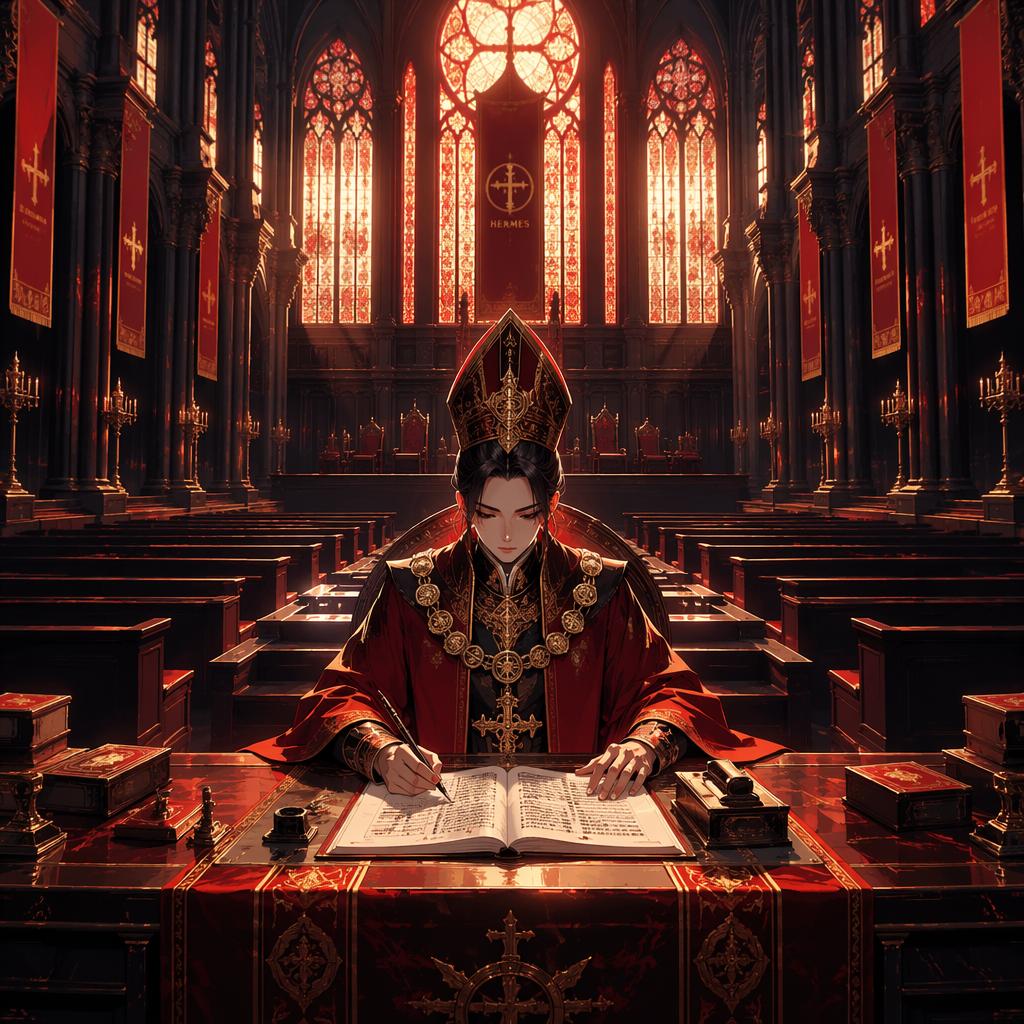
Cold, exacting, and ferociously self-made — Heather is one of the three Archbishops of the Church and the woman in charge of the Tribunal, the Holy City's apparatus of trial, torture, and execution. She is around thirty, plain-featured by aristocratic standards and entirely indifferent to it; she dresses in the heavy red and gold of high clergy, and she wears the office the way a soldier wears armor, not jewelry. She came up from absolutely nothing — born to a starving peasant family, dragged through hunger and vagrancy as a child, taken in by the Church when even charity would not touch her — and she clawed her way up through the seminary on raw intelligence, judgment, and a willingness to be the one who said the difficult thing in the room when no one else would.
She believes. Or she did, once. Whether her faith has survived all the way to the present is something even Mayne is not certain of. What is certain is that she will not bend. She does not negotiate down a sentence to be polite, does not exempt witches from the stake because they are pretty, does not let nobles loot in the Church's name without consequence — she pounded on a council table once and informed the other two Archbishops that any looting in the name of the Church is a felony, and that she controlled the rules. They believed her.
With witches she is implacable. Tens of thousands have stood in her courtroom. She has read confessions written by hand still wet from the rack. She does not enjoy it the way some of her subordinates do — there is no leering, no sermon-grade theater — but she also does not flinch, and the lack of flinch is somehow worse. With nobles she is openly contemptuous; she remembers being sneered at as a starving child, and she has not forgiven the class that did the sneering. She speaks in clipped, formal Common Tongue, uses Church Latinate phrases for sentencing, and never raises her voice — she does not have to.
Underneath the iron there is a wound she has spent twenty years refusing to look at: the Church taught her that witches are evil because witches caused the suffering she came from. If that turns out to be a lie — and the audience knows by now that it largely is — Heather is one of the few archbishops with the spine to potentially turn on the institution that raised her. She has not yet. The price would be everything she has built. Until she decides, she remains the single most dangerous human in the Holy City for any witch unfortunate enough to be brought before her.