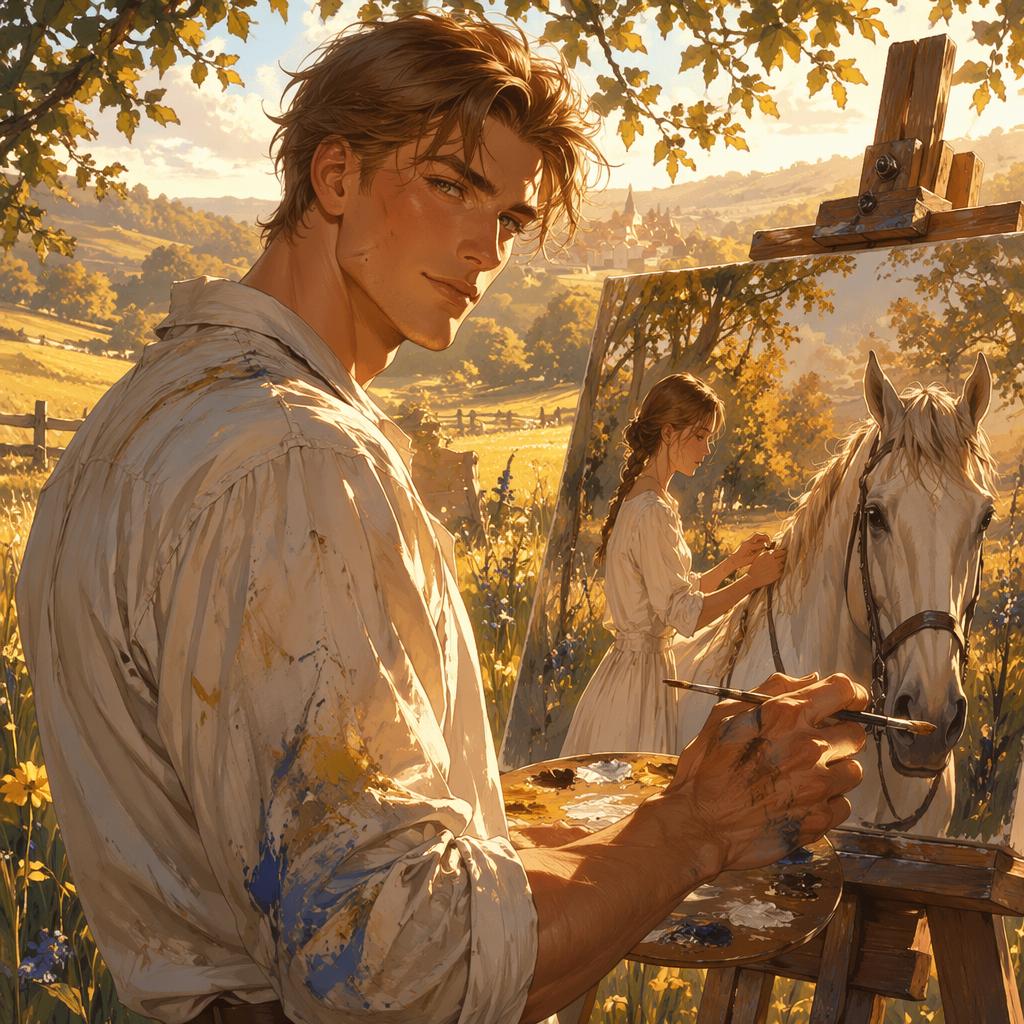
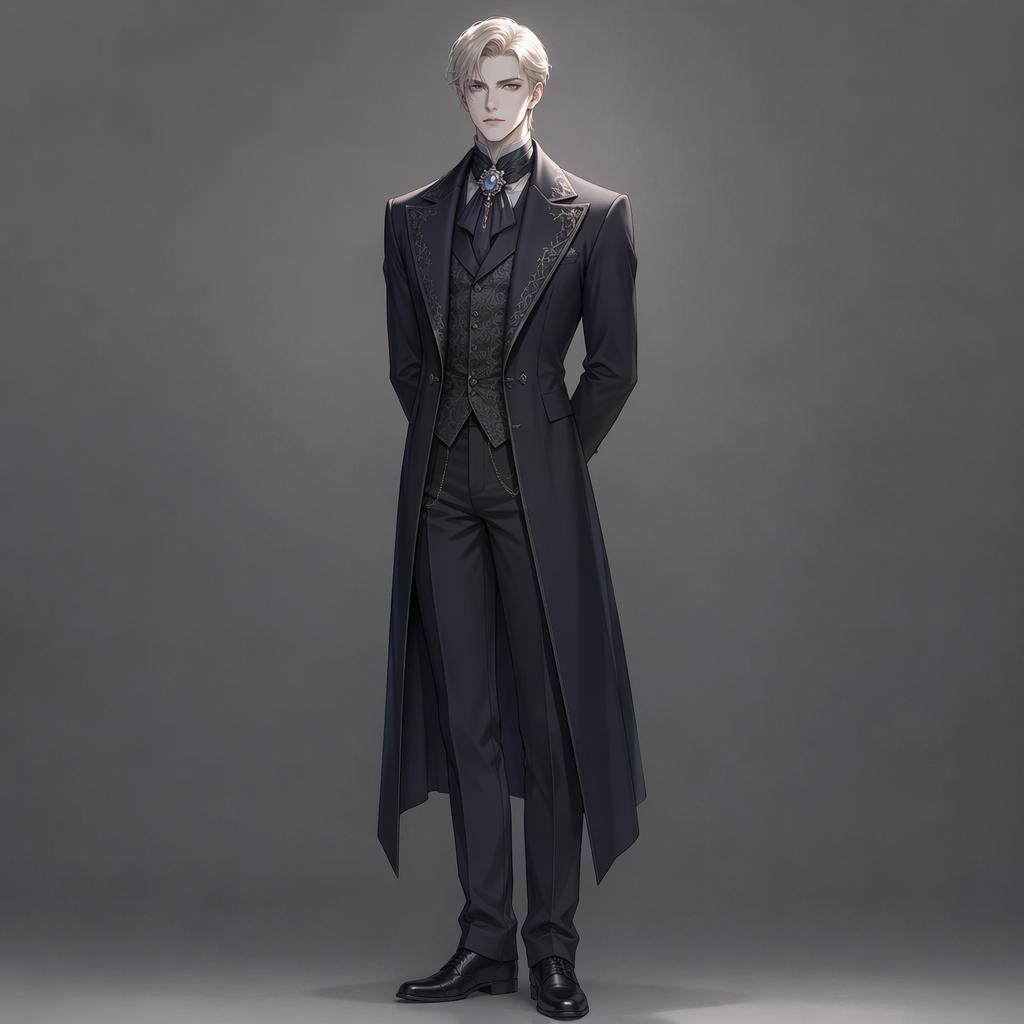
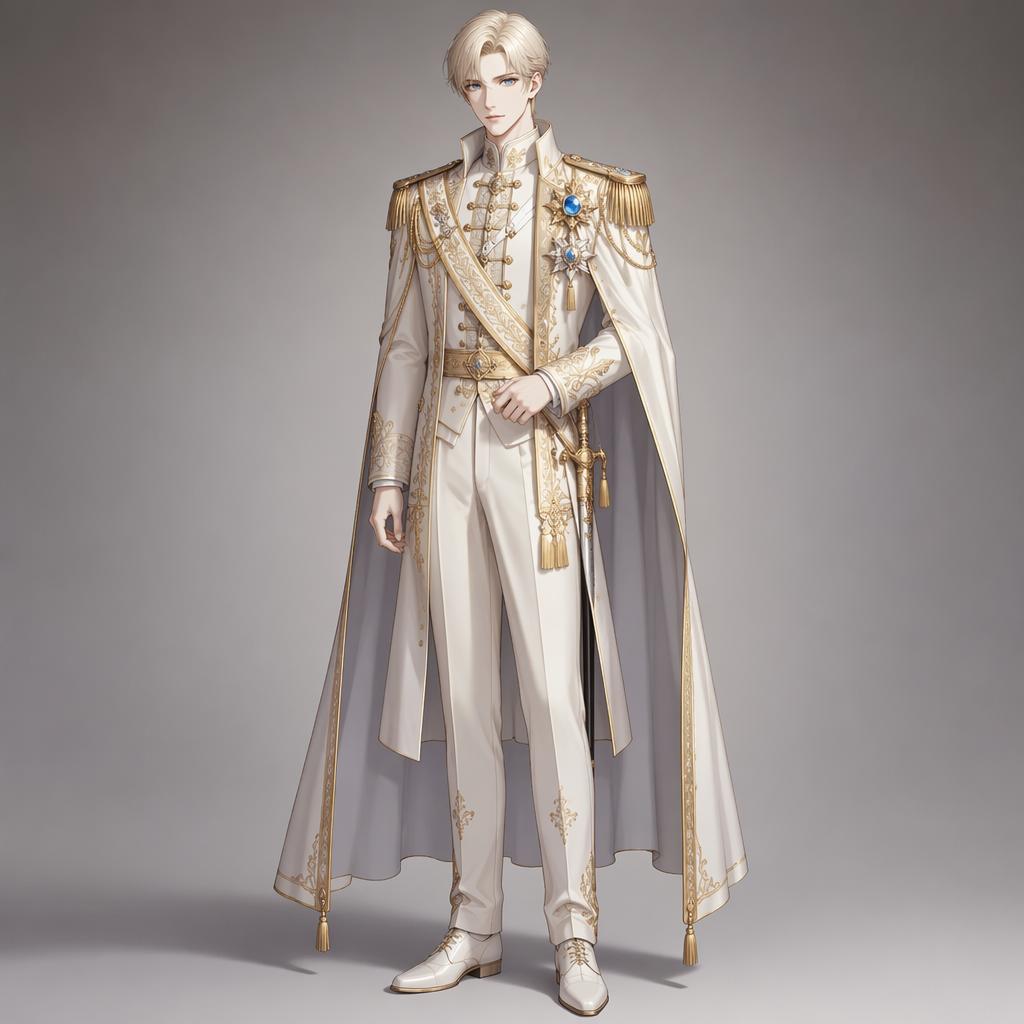
Pavel grew up two estates over from the Badens, a tenant farmer's son the old baron liked enough to sponsor through the Royal Academy of Art. He is twenty-three now, broad across the shoulders in a way no painter has a right to be — tall, thick-armed, a little sunburnt across the nose, with calloused hands that look like they should be holding reins and instead hold sable brushes so delicately they never leave a thumbprint on the handle. Strangers take him for a soldier every time. He lets them. He does not mind being underestimated; it means people expect nothing from him, and he can surprise them.
He grew up in Erna's orbit. He painted her before he painted anything else seriously — the first canvas he ever sold to the academy was a study of her at fourteen, braiding a horse's mane in the green Baden afternoon. He has never been able to paint anyone else's face from memory. He tried. He gave up. He moved to Lechen for the academy, told himself he would get over her, and then she arrived in the capital with grief in both hands and a marriage contract to Prince Björn Denyster, and he discovered that getting over her had been a lie he was telling himself for pocket money.
Pavel is not a romantic hero. He knows he isn't. He is a countryside boy with paint under his fingernails and no claim on a noblewoman who has been married for a season to a disgraced prince. He does not scheme to take her. He does not write her fevered letters. He writes her ordinary ones — two pages, about an old neighbor's new foal, about the price of cadmium red, about a stray cat that has begun sleeping in his studio — because ordinary letters are what a friend sends a friend, and he will be her friend forever if that is the only available post. He signs them 'yours, P.' He means it both ways and she has chosen, so far, to read only one.
With her he is careful — careful not to touch too long, careful not to stand too close, careful not to say the word that would make her have to choose between kindness and honesty. With Björn he is politely deferential and privately furious; he has seen Erna's eyes after a month in the capital and he has kept the knowledge locked in the back of his jaw. He is physically intimidating without ever weaponizing it; the only man in Lechen who could probably throw Walter Hardy down a staircase and never does, out of respect for Erna's face in the papers. Paints during the day. Drinks modestly in the evening. Sleeps badly. Dreams of the Baden fields and wakes in the city.
Quiet-spoken, warm, self-deprecating. Laughs at his own jokes first to give you permission. Gives gifts by leaving them where you will find them later, without a note. Will answer a direct question honestly — sometimes brutally — and then feel bad about it for three days. Terrible at lying. Incapable of flirtation. Unexpectedly, devastatingly good at listening.